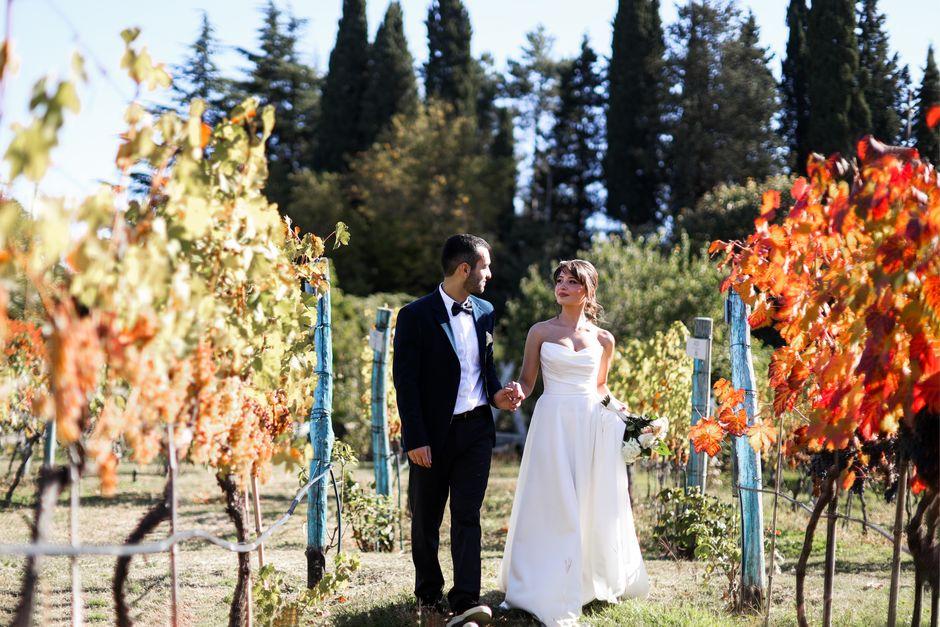
A vineyard is one of the most-searched wedding settings in Virginia, and for good reason: rows of vines against the Blue Ridge make a ceremony backdrop with very little decorating. Our directory lists 114 venues whose own websites or Google profiles say they are a vineyard or winery. This guide covers where they cluster, how a winery wedding differs from a dedicated event venue, and what to ask before you book.
Where Virginia's winery venues are
Virginia's wine country is organized into federally recognized American Viticultural Areas, including Monticello around Charlottesville, Middleburg in Loudoun and Fauquier, the Shenandoah Valley, the Northern Neck George Washington Birthplace area, Virginia's Eastern Shore, Rocky Knob and the North Fork of Roanoke. The venues in our directory line up with that map:
- Charlottesville and Central Virginia: 33 winery venues, the most of any region, around Charlottesville, Crozet, Afton and Keswick. Many pair vines with mountain views.
- Northern Virginia: 24, especially around Purcellville, Leesburg, Hamilton and Delaplane, an hour or less from Washington Dulles.
- Blue Ridge and Southwest: 17, from Bedford to Floyd and the Blue Ridge Highlands.
- Shenandoah Valley: 13, often on farms that also grow fruit or lavender.
- Fredericksburg and the Northern Neck: 10, several close to the Potomac and Rappahannock rivers.
- Coastal Virginia and the Richmond Region: 6 each, including James River and Williamsburg-area wineries.
- Southside: 5.
Browse all of them on our Virginia vineyard and winery venues page. Each listing links to the line on the winery's own site that it is based on.
A few examples
To give a sense of the range: King Family Vineyards in Crozet and Early Mountain Vineyards in Madison both describe mountain views; Zion Springs in Hamilton offers exclusive use and an all-inclusive package; Blue Valley Vineyard and Winery in Delaplane has on-site lodging; and Saudé Creek Vineyards near Williamsburg adds a waterfront. These are examples from our listings, not endorsements, so compare several before you choose.
How winery weddings differ
Most wineries are working businesses first. That shapes a few things you should settle early:
- Public hours. Many tasting rooms stay open on weekends. Ask whether your event is private, whether the public area closes, and from what time. In our data, only 3 winery venues mention exclusive use.
- Wine. Expect to serve the winery's own wine. Ask how it is priced (by bottle, per guest or as a package) and whether beer or spirits can be added.
- Food. Some wineries have their own kitchen or a short list of required caterers. Only 5 winery venues in our data say outside caterers are allowed, and 5 say they cater in-house, so ask early.
- Weather. Vines are outdoors by definition. 18 of the winery venues mention a rain plan or covered space; confirm that it fits your full guest count.
- Lodging. 17 winery venues mention on-site lodging. Everywhere else, check the drive back to hotels, especially on unlit rural roads after dark.
When to have a vineyard wedding in Virginia
Spring brings green vines and mild days. Summer brings full canopy but also humidity and afternoon storms. Fall is the classic choice, with harvest activity and foliage across the Blue Ridge, so popular wineries' fall weekends tend to book early. If your date is in harvest season, ask how busy the winery will be with the crush and tasting crowds that weekend. Winter weddings are less common; if you are considering one, ask what indoor space the winery has and how many guests it seats.
Before you sign
- Ask for the full contract, including the event minimum, service charge and any per-bottle or corkage fees.
- Walk the ceremony site at the same time of day as your wedding to check the sun and the view.
- Ask about shuttle access and parking, since some vineyard roads are narrow gravel.
- Line up the paperwork: a Virginia license is good for 60 days, so read our marriage license guide.
For other settings, see Virginia wedding venue types by region.